
South African Rooibos Seeds Set for Historic Journey to International Space Station
South Africa’s Rooibos in Space programme will send indigenous Rooibos seeds to the International Space Station in October, giving learners an opportunity to participate in real-world space and agricultural research.
CAPE TOWN – South Africa’s famous Rooibos plant is preparing to make history by travelling beyond Earth as part of an ambitious scientific and educational initiative.
The newly launched Rooibos in Space programme will send Rooibos seeds to the International Space Station (ISS) in October 2026. The groundbreaking project combines agricultural research, space science and practical Science, Technology, Engineering and Mathematics (STEM) education.
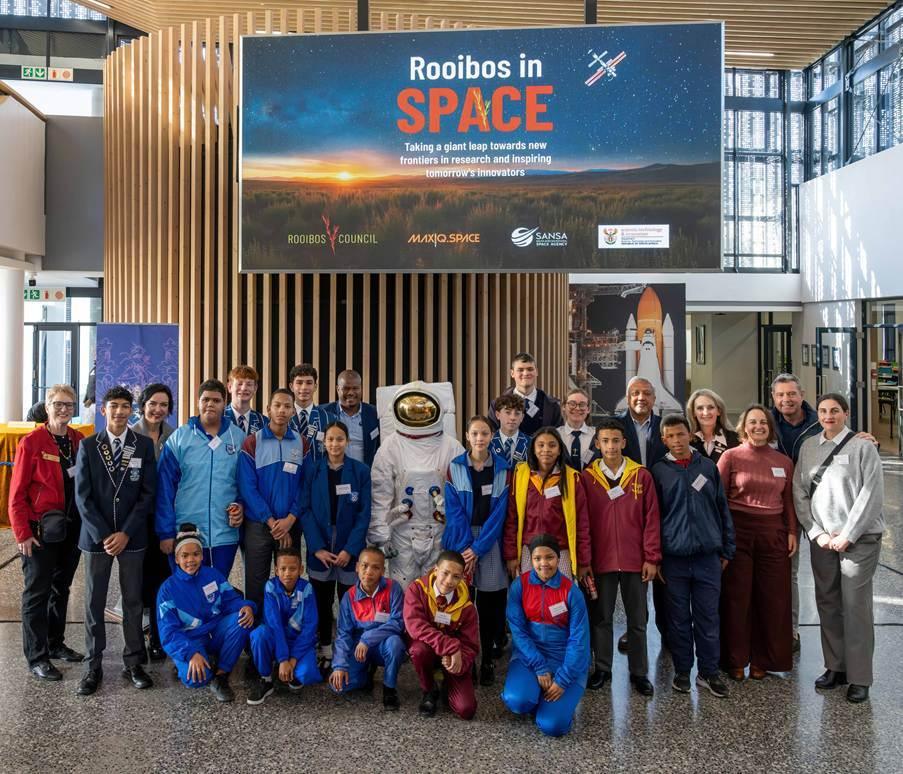
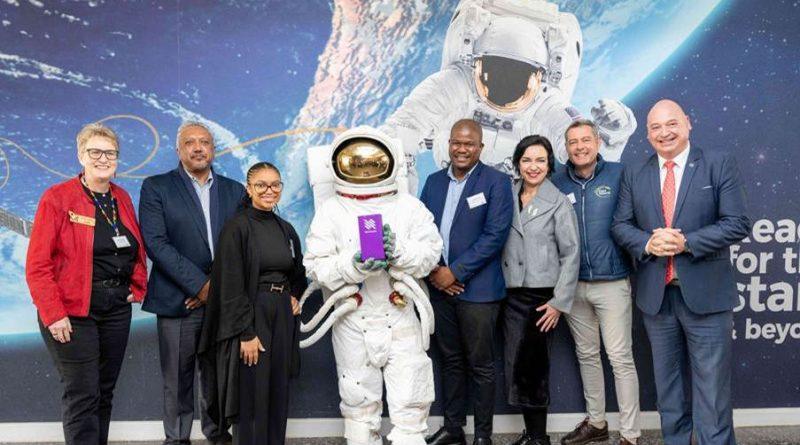
The initiative was officially unveiled at Parklands College’s Innovation Centre in Cape Town, bringing together representatives from education, government, academia, agriculture and South Africa’s growing space sector.
Developed by the South African Rooibos Council (SARC), the project is being delivered in partnership with MaxIQ Space and supported by the South African National Space Agency (SANSA).
Rooibos seeds to experience conditions in space
During their stay aboard the ISS, the Rooibos seeds will be exposed to microgravity and space radiation for several weeks. They will then return to South Africa and be planted alongside seeds that remained on Earth.
Researchers and learners will compare the two groups to determine whether space travel affected the seeds’ germination, growth, resilience and potential yield.
Rooibos is indigenous to South Africa and grows naturally in the Cederberg region of the Western Cape. Its selection gives the mission a strong national identity while introducing an important South African agricultural product to international space research.
Seven schools from the Cederberg region will participate in the experiment. Working with Rooibos farmers, learners will plant the seeds, record observations and analyse the results as part of a structured scientific investigation.
Parklands College will conduct a parallel experiment to provide additional comparative information.
Learners become part of a real space mission
The programme aims to move science beyond textbooks by allowing young people to participate in an authentic research project connected to the ISS.
Participating schools will receive extended STEM education covering space science, plant biology, sustainable agriculture, experimentation and data analysis. The activities will be linked to the school curriculum.
“The value of this project lies in giving learners exposure to real research processes linked to space science,” MaxIQ Space founder and director Judi Sandrock said.
“It provides a structured opportunity to develop scientific thinking, data analysis skills and an understanding of how experimentation works in practice.”
Learners throughout South Africa will also be invited to design the official Rooibos in Space mission patch during July and August. This will allow schools outside the main research programme to participate in the historic mission.
Preparing plants for future space exploration
Plant research has become increasingly important as international space agencies prepare for longer missions to the Moon and, eventually, Mars.
Future astronauts may need self-sustaining systems that can produce food, support oxygen generation and improve crew well-being during extended journeys.
Experiments aboard the ISS have already shown that plants such as lettuce can grow in microgravity. Research involving peas and soybeans has also helped scientists understand how plants respond to unusual gravity, radiation and environmental stress.
Knowledge from these experiments could benefit both future space settlements and agriculture on Earth, particularly as farmers face drought, changing weather patterns and other climate pressures.
SARC director Dawie de Villiers said the Rooibos project brought together South Africa’s agricultural heritage and its scientific future.
“Rooibos has long been part of South Africa’s agricultural heritage. This project places it within a broader scientific context, where plant biology, space research and education intersect,” he said.
De Villiers added that the programme demonstrated the importance of investing in scientific literacy and developing the next generation of researchers and innovators.
Supporting South Africa’s growing space economy
SANSA Science Engagement Manager Thandile Vuntu said space science was increasingly connected to everyday activities, including communications, food security and environmental monitoring.
According to Vuntu, projects such as Rooibos in Space could help young people understand the skills required to participate in the rapidly developing space economy.
The initiative also supports national priorities relating to skills development, scientific innovation and cooperation between schools, government, universities and private industry.
South African Radio Astronomy Observatory postdoctoral fellow Dr Kelebogile Gasealahwe encouraged learners to remain curious and persistent when considering careers in science.
She highlighted the role played by facilities such as the MeerKAT radio telescope in strengthening South Africa’s contribution to international astronomy and creating new opportunities for local scientists.
A proudly South African scientific mission
The Rooibos in Space programme presents South African learners with a rare opportunity to investigate a question with both local and global importance: how will one of the country’s most distinctive plants respond after travelling in space?
Public updates, learner activities and major mission milestones will be shared as preparations continue for the seeds’ October flight to the ISS.
The initiative could inspire more learners to pursue careers in science, engineering, agriculture and space technology while placing a proudly South African plant at the centre of research into humanity’s future beyond Earth.