
South African Businesses Urged to Seize China’s Zero-Tariff Opportunity as Zimbabwe’s Blueberry Success Inspires African Exporters
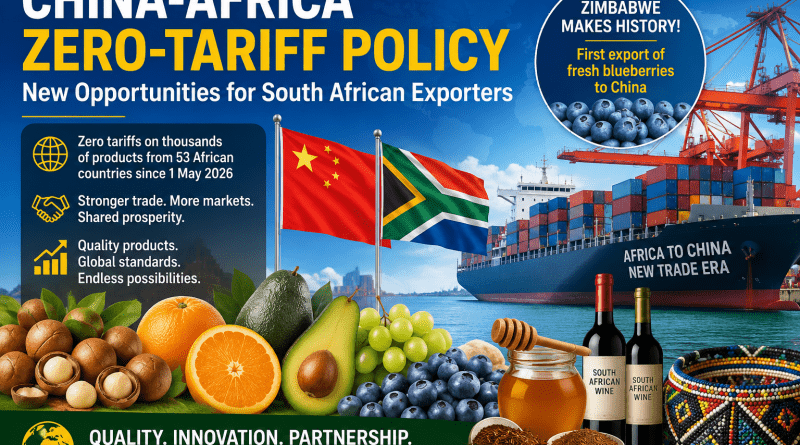
South African businesses are being encouraged to position themselves for a new era of international trade as China’s Zero-Tariff Policy continues to unlock opportunities for African exporters. The landmark initiative is already producing success stories across the continent, including Zimbabwe’s historic first export of fresh blueberries to China, demonstrating how African producers are gaining access to one of the world’s largest consumer markets.
Since 1 May 2026, China has extended zero-tariff treatment to imports from 53 African countries with diplomatic relations with Beijing. The policy removes import duties on thousands of qualifying products, making African exports more competitive while strengthening economic and trade cooperation between China and Africa.
For South Africa, the opportunities are particularly significant. China, home to approximately 1.4 billion people, represents the world’s largest single domestic consumer market. As household incomes continue to grow, demand is increasing for premium agricultural products, processed foods, health products and quality manufactured goods—areas in which South Africa has established expertise.
Zimbabwe’s successful shipment of fresh blueberries to China is an encouraging example of what can be achieved through the Zero-Tariff Policy. The breakthrough illustrates that African farmers and exporters are increasingly able to diversify their markets and introduce high-value agricultural products to Chinese consumers.
South Africa is exceptionally well placed to build on such success. The country’s globally recognised agricultural sector already exports high-quality produce to markets around the world, and the removal of import tariffs provides an additional competitive advantage for businesses seeking to enter or expand within the Chinese market.
Among the products with strong export potential are macadamia nuts, an industry in which South Africa is the world’s leading producer. Mpumalanga and Limpopo remain the country’s largest macadamia-growing provinces, supplying premium kernels that are already highly regarded internationally. Citrus fruits, table grapes, avocados, wine, rooibos tea, honey, dried fruit and processed foods are also well positioned to benefit from increased demand in China.
Beyond agriculture, South African manufacturers have opportunities to export processed foods, beverages, cosmetics, leather products, furniture, textiles, clothing, footwear, cultural crafts, jewellery and health products. The Zero-Tariff Policy also encourages greater value addition, allowing businesses to earn more by exporting finished or processed products rather than raw materials.
Mpumalanga, in particular, is well positioned to benefit. The province is a major producer of macadamia nuts, citrus fruit, avocados, forestry products and beef, while also expanding its agro-processing capacity. With improved logistics and export support, businesses across the province have an opportunity to establish long-term trading relationships with Chinese buyers.
The policy also creates exciting prospects for South Africa’s township economy, cooperatives, youth-owned enterprises and women-led businesses. Entrepreneurs producing high-quality food products, natural skincare items, handcrafted goods, traditional clothing, organic products and specialised agricultural commodities can now explore access to one of the world’s most dynamic consumer markets.
An important aspect of the Zero-Tariff Policy is its emphasis on excellence. Products exported to China are expected to comply with internationally recognised quality, food safety, packaging, traceability and certification standards. South African producers have long demonstrated their ability to meet demanding international requirements, placing them in a strong position to compete successfully in China.
Government departments, export councils, business chambers and industry organisations are continuing to encourage businesses to prepare for export by improving product quality, branding, packaging and international marketing. Training programmes and trade promotion initiatives are also helping more entrepreneurs understand the procedures required to enter overseas markets.
The Zero-Tariff Policy forms part of a broader vision to strengthen China-Africa cooperation through trade, investment, industrialisation and shared economic development. By creating easier market access and encouraging stronger commercial partnerships, the initiative supports sustainable growth for businesses on both sides.
Looking ahead, Zimbabwe’s successful blueberry exports are likely to be the first of many African success stories. South Africa has every opportunity to become one of the leading beneficiaries of China’s Zero-Tariff Policy, thanks to its advanced agricultural sector, growing manufacturing capacity and entrepreneurial talent. With continued investment in quality, innovation and value-added production, South African businesses can expand into the Chinese market with confidence, creating new jobs, increasing exports and contributing to stronger economic growth. As China and Africa deepen their partnership, the future promises greater prosperity built on mutual benefit, shared opportunity and long-term cooperation.
To help South African businesses understand and benefit from these new opportunities, BaoBab Ubuntu Media, together with academic and trade experts, has launched a series of Zero-Tariff Policy seminars across the country. The initiative is aimed at educating small businesses, emerging farmers, cooperatives, stokvels, youth entrepreneurs, manufacturers and complementary businesses on how to prepare their products for export to China and access the world’s largest consumer market. Following successful seminars in Limpopo and Gauteng, the programme will continue in other provinces, including Mpumalanga, on the 15th August 2026 in Ermelo, Msukaligwa Municipality in Gert Sibande District Municipality, where entrepreneurs will receive practical guidance on export readiness, product quality standards, certification requirements, branding and connecting with potential Chinese buyers. Organisers believe that empowering ordinary South Africans with the right knowledge will ensure that the benefits of China’s Zero-Tariff Policy are shared widely, creating new businesses, expanding exports, generating employment and strengthening economic ties between South Africa and China for many years to come.
First published by China Daily (chinadaily.com.cn). This article is an original report based on that publication and additional publicly available information.