
China’s Changsha Offers African Delegates a Blueprint for Stronger South-South Cooperation
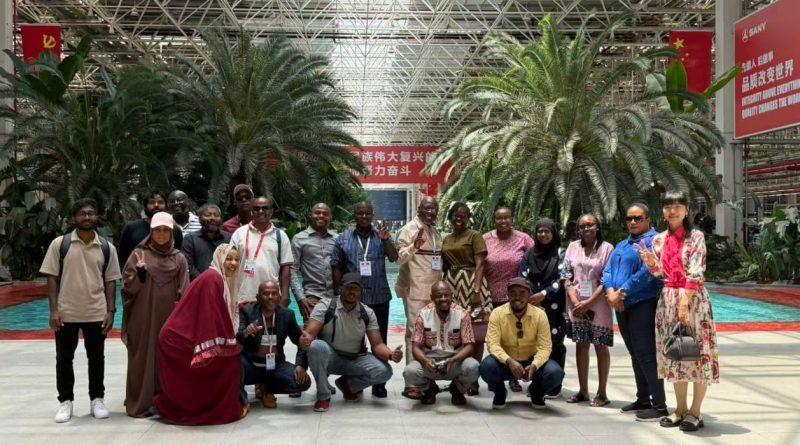
CHANGSHA, CHINA – A recent study visit by delegates from South Africa, Kenya, the Maldives and the Comoros, which moved them from Kunming to Changsha, the capital of China’s Hunan Province, highlighted the growing importance of cultural diplomacy, educational exchanges and economic partnerships in advancing South-South cooperation.
The delegation, participating in the Seminar on Friendship-City Cultural Exchanges for Indian Ocean Countries, toured several key institutions in Changsha, gaining first-hand experience of China’s development model and exploring new opportunities for collaboration between Chinese and African cities. The visits reflected the broader vision of strengthening people-to-people ties and promoting mutual learning among countries of the Global South.
One of the key stops was the Changsha Economic and Technological Development Zone (CETDZ), one of China’s leading national industrial parks. Home to globally competitive manufacturing companies, the zone showcased how strategic planning, industrial innovation and international trade can transform local economies.
For African countries such as South Africa and Kenya, the visit offered practical lessons on industrialisation, special economic zones and investment attraction. African cities seeking to create jobs, promote manufacturing and increase exports could draw valuable insights from Changsha’s experience.
The exchange also underscored the growing importance of sister-city partnerships as vehicles for economic diplomacy. City-to-city cooperation has increasingly become an important tool for promoting trade, investment and cultural understanding across borders. Sister-city programmes around the world have demonstrated that local governments can play a critical role in fostering international cooperation and citizen diplomacy.
Another significant stop was Xingchen Online New Media Co., Ltd., where delegates explored China’s approach to digital communication, international publicity and city branding.
As misinformation and unequal global information flows continue to challenge developing countries, delegates discussed the importance of strengthening media cooperation among Global South nations. The visit highlighted how digital platforms can be utilised to tell authentic stories about developing countries, promote tourism and investment, and strengthen cultural exchanges.
The importance of media cooperation between China and Africa has grown significantly in recent years, with both sides increasingly seeking to build shared communication platforms and enhance international discourse from a Global South perspective. Recent initiatives in Changsha have further strengthened China-Africa communication cooperation and cultural storytelling.
Educational diplomacy also featured prominently during visits to Yuelu Academy and Hunan Normal University.
Founded more than 1,000 years ago, Yuelu Academy provided delegates with a rare opportunity to explore China’s long tradition of scholarship and intellectual development. The academy, now integrated into Hunan University, symbolises the continuity between traditional learning and modern higher education.
For delegates from Africa and the Indian Ocean region, the academy demonstrated how cultural heritage can remain relevant in contemporary society while preserving national identity.
At Hunan Normal University, discussions focused on international cooperation, talent development and student mobility. African universities continue to expand partnerships with Chinese institutions in areas ranging from science and technology to language training and teacher education.
Such academic cooperation aligns with broader China-Africa commitments to expand educational exchanges, vocational training and research partnerships. Under frameworks such as the Forum on China-Africa Cooperation (FOCAC), China and African countries have committed themselves to deepening educational collaboration and increasing opportunities for young people.
Experts believe that exchanges involving universities, media institutions and economic development zones are essential building blocks for stronger South-South cooperation.
As China and African nations prepare for the 2026 China-Africa Year of People-to-People Exchanges, such visits are expected to play an increasingly important role in fostering mutual understanding, strengthening cultural ties and building a shared future among countries of the Global South.