
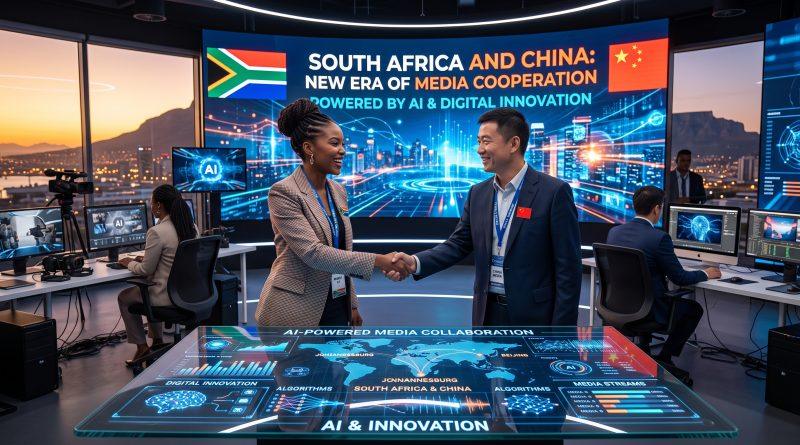
South Africa and China Poised for a New Era of Media Cooperation Powered by AI and Digital Innovation
South Africa’s participation in the 7th Forum on China-Africa Media Cooperation in Beijing may signal the beginning of a new chapter in relations between the two countries, one in which media, artificial intelligence (AI), digital technology and skills development become increasingly important pillars of cooperation.
According to an original report published by China Daily, South African Deputy Minister in the Presidency Kenny Morolong participated in the forum held in Beijing from August 19 to 21, 2026, under the theme: “Share Development Opportunities, Shape the Audio-Visual Future.”
The gathering brought together government representatives, media organisations, broadcasters, technology companies and industry stakeholders from China and Africa to explore opportunities created by digital transformation.
While the immediate discussions focused on broadcasting technologies, content innovation, AI, skills development and audience engagement, the longer-term implications could be far more significant.
From Traditional Media Cooperation to a Digital Partnership
China-Africa media cooperation has evolved considerably over the years. Earlier partnerships largely concentrated on journalist exchanges, training programmes, content-sharing agreements and broadcasting cooperation.
However, the global media landscape is changing rapidly.
Artificial intelligence, mobile journalism, short-form video, digital broadcasting, multilingual translation, virtual production and data-driven audience engagement are transforming the way information is produced and consumed.
The discussions in Beijing suggest that future China-Africa media cooperation could increasingly move beyond traditional exchanges towards practical technological partnerships.
South African and African media practitioners could potentially benefit from expanded access to digital skills training, AI-powered production tools, technology exchanges and joint innovation programmes.
Such cooperation may also create opportunities for smaller community media organisations, which often struggle with limited resources but could benefit significantly from affordable AI-assisted content production and digital distribution.
AI Could Become a Major Area of Cooperation
One of the most significant areas emerging from the forum is artificial intelligence.
AI is already reshaping journalism and communication globally. It can assist with transcription, translation, video editing, content research, audience analysis and the creation of multimedia material.
For a multilingual country such as South Africa, and a continent with thousands of languages, AI-powered translation technologies could eventually help media organisations reach audiences previously excluded by language barriers.
Imagine a future where a community news story produced in isiZulu, Sepedi or Xitsonga could be efficiently translated and adapted for Chinese, English and other African audiences.
This could significantly increase the global reach of African stories.
At the same time, African journalists and media organisations could gain greater access to information, perspectives and developments from China through more accessible multilingual platforms.
However, the emphasis on responsible AI will remain important. Future cooperation is likely to include discussions around ethical AI, accuracy, misinformation, data protection and ensuring that technology supports journalists rather than replacing human judgement.
Stronger African Voices in the Global Information Space
Perhaps one of the most important outcomes of deeper cooperation could be the strengthening of African voices internationally.
For decades, international narratives about Africa have often been dominated by external perspectives. The Beijing forum highlighted the importance of ensuring that Africa and the Global South play a greater role in shaping the international information environment.
Future cooperation could therefore lead to more joint productions, documentary partnerships, news exchanges and digital content platforms featuring African stories told from African perspectives.
This could include stories about entrepreneurship, agriculture, innovation, tourism, education, infrastructure, science and cultural exchanges.
Instead of Africa only appearing in international media during moments of crisis, greater technological and editorial cooperation could help create a more balanced and comprehensive picture of the continent.
China’s rapidly expanding digital media ecosystem could also provide African content creators with valuable lessons in reaching large audiences through mobile platforms, short video, livestreaming and integrated digital ecosystems.
Opportunities for Young Journalists and Content Creators
Looking ahead, young people could become among the biggest beneficiaries of this emerging partnership.
The media industry is increasingly moving away from traditional job descriptions. Tomorrow’s journalist may need to understand video production, social media, AI tools, data journalism and digital audience engagement.
Future China-South Africa cooperation could potentially result in expanded training programmes, technology incubators, exchange initiatives and joint innovation projects specifically targeting young journalists and digital content creators.
Universities, media houses and technology institutions may also become more closely involved.
A future China-Africa digital media academy, AI journalism training programme or cross-border innovation hub would not be surprising given the direction of current discussions.
Such initiatives could help prepare a new generation of African media professionals for an increasingly technology-driven global economy.
Community Media Could Benefit from Digital Transformation
One particularly important opportunity lies in community media.
Across South Africa, many community newspapers and small media enterprises face the challenge of declining print advertising revenues and the high costs associated with digital transformation.
AI and affordable digital technologies could help smaller publishers produce multimedia content, manage digital platforms and reach audiences beyond their immediate geographical areas.
Future cooperation should therefore not be limited to major broadcasters and large media corporations.
If properly structured, China-Africa partnerships could include capacity-building programmes specifically designed for small publishers, community radio stations and emerging digital media entrepreneurs.
This would help ensure that digital transformation becomes inclusive rather than benefiting only the largest organisations.
Beyond Media: Building People-to-People Connections
The future of media cooperation could also extend beyond journalism.
Media plays a critical role in strengthening people-to-people relations.
As South Africa and China expand cooperation in trade, education, tourism, technology, agriculture and culture, there will be a growing need for reliable communication platforms that help citizens understand one another.
Joint documentaries, cultural programmes, tourism content and youth exchanges could contribute to stronger understanding between the people of both countries.
Digital platforms could allow South African entrepreneurs to tell their stories directly to Chinese audiences, while Chinese innovators and businesses could gain a better understanding of opportunities within South Africa and Africa.
In this sense, media becomes more than an information sector, it becomes an important bridge supporting broader economic and social cooperation.
The Next Step: Turning Dialogue into Practical Projects
The real measure of success following the Beijing forum will be how discussions are translated into practical programmes.
Possible future developments could include:
- Joint China-South Africa AI and media training programmes;
- Journalist and digital content creator exchange initiatives;
- Shared technology and innovation platforms;
- Multilingual AI-powered content distribution;
- Joint documentaries and audio-visual productions;
- Community media digital transformation projects;
- Media innovation hubs and incubators;
- Research cooperation between universities and technology institutions;
- Programmes addressing misinformation and responsible AI;
- Greater collaboration among African and Chinese media organisations.
The growing relationship between technology and media means that cooperation will increasingly be measured not only by the number of meetings held, but by the digital infrastructure, skills and sustainable platforms created.
A Partnership with Mutual Benefits
The 7th Forum on China-Africa Media Cooperation demonstrates that the relationship between South Africa, China and the wider African continent is entering new territory.
For South Africa and Africa, deeper cooperation could bring access to skills, technology, innovation and new international audiences.
For China, stronger partnerships with African media organisations could provide a better understanding of African societies while creating more direct channels for cultural and people-to-people engagement.
Most importantly, both sides stand to benefit from a more diverse and balanced global information environment.
As artificial intelligence and digital technologies continue to transform the world, South Africa and China have an opportunity to build media partnerships that are not simply about sharing content, but about sharing knowledge, developing skills and creating new opportunities.
The challenge now is to ensure that the conversations begun in Beijing evolve into practical, inclusive and sustainable projects.
If that happens, the future of China-South Africa media cooperation could become a powerful example of how technology can connect nations, empower communities and give a stronger voice to the Global South in shaping its own story.
First Published by People’s Daily, and futher developed by Jozi Advertiser.