
Shenzhen and Johannesburg Strengthen China-South Africa Trade and Investment Cooperation
Johannesburg – Economic relations between China and South Africa have received another boost following a high-level business conference aimed at connecting companies and unlocking new opportunities between Shenzhen and Johannesburg.
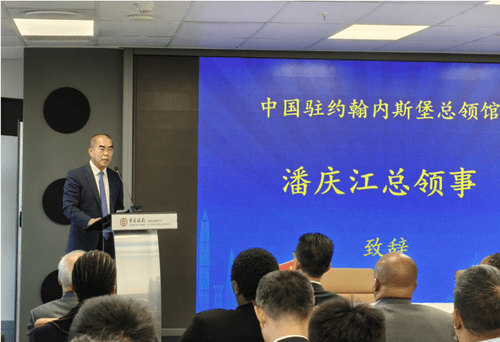
Chinese Consul General in Johannesburg Pan Qingjiang attended the China (Shenzhen)-South Africa (Johannesburg) Economic and Trade Cooperation Conference on 20 July 2026. The gathering brought together government representatives, business leaders and development organisations from both countries.
Among those attending were Liu Junlin, Vice-Chairman of the Shenzhen General Chamber of Commerce, Dr Sunshine Myende, Executive Chairperson of South Africa’s National Youth Development Agency, and representatives from the private sector.
The conference formed part of growing efforts to move China-South Africa cooperation beyond national agreements by building direct links between cities, provinces, chambers of commerce and businesses.
Addressing delegates, Pan highlighted China’s development achievements and reaffirmed the country’s commitment to peace, development, cooperation and mutual benefit.
He said China would continue expanding high-level economic openness while promoting deeper trade and investment relations with Africa. Pan also identified China’s zero-tariff policy for qualifying African imports as an important opportunity for South African businesses.
He expressed the hope that the conference would encourage practical cooperation, strengthen relations between Shenzhen and Johannesburg and contribute to the wider China-South Africa partnership.
Shenzhen offers valuable technology and investment opportunities
Shenzhen is one of China’s leading centres for technology, manufacturing, finance, logistics and international trade. Once a relatively small settlement, it developed rapidly after being designated China’s first Special Economic Zone in 1980.
The city is now home to globally recognised technology and manufacturing companies and has become an important centre for telecommunications, electric vehicles, batteries, renewable energy, drones, electronics, artificial intelligence and digital finance.
These strengths could offer significant benefits to Johannesburg and the broader Gauteng economy.
Closer cooperation could help South African companies secure partnerships with Shenzhen businesses in sectors such as renewable energy, advanced manufacturing, smart-city technology, financial technology, healthcare equipment and digital services.
Johannesburg-based small and medium-sized enterprises could also gain access to Shenzhen’s large networks of manufacturers, investors, distributors and technology developers.
Collaboration should, however, extend beyond importing finished products. Joint ventures could encourage Chinese companies to manufacture, assemble or process products in Gauteng, helping South Africa create employment, transfer technical skills and expand its industrial base.
Shenzhen businesses could also assist Johannesburg’s growing technology and start-up community through incubation programmes, investment funds, research partnerships and entrepreneur exchanges.
The involvement of the National Youth Development Agency is particularly important because young South African entrepreneurs need access to capital, markets, technology and business training. Partnerships with Shenzhen could connect youth-owned enterprises with established Chinese innovation networks.
Johannesburg provides a gateway into African markets
Johannesburg also offers major benefits to Shenzhen companies seeking to expand their presence in Africa.
As South Africa’s leading commercial and financial centre, Johannesburg is home to major banks, mining companies, retailers, telecommunications businesses, professional services firms and the Johannesburg Stock Exchange.
Its location in Gauteng gives investors access to South Africa’s largest provincial economy, well-developed transport infrastructure and the OR Tambo International Airport logistics corridor.
For Shenzhen companies, Johannesburg can serve as a base from which to reach customers across Southern Africa and the wider African Continental Free Trade Area.
The city also presents opportunities in areas where Shenzhen companies have considerable expertise, including:
- Renewable energy and battery storage
- Electric vehicles and charging infrastructure
- Public transport technology
- Digital payment systems
- Telecommunications and broadband
- Waste management and recycling
- Water-saving technologies
- Smart municipal services
- Medical technology
- Affordable electronics and industrial machinery
For cooperation to deliver sustainable benefits, investments should include local procurement, skills development, technology transfer and opportunities for South African suppliers. This would help ensure that city-to-city cooperation produces jobs and measurable improvements in communities.
Zero-tariff policy opens doors for South African exporters
The conference took place as China and South Africa are expanding efforts to improve market access for South African products.
China began implementing zero-tariff treatment across all tariff lines for qualifying products from 53 African countries with which it has diplomatic relations on 1 May 2026. The policy can help South African exporters reduce the cost of entering the Chinese market and improve the competitiveness of their goods.
Potential opportunities exist for agricultural produce, processed foods, minerals, manufactured goods, cosmetics, clothing, traditional products and other value-added exports.
South African businesses must still meet rules of origin, food safety, packaging, labelling, inspection and other Chinese market requirements. Zero tariffs remove customs duties from qualifying goods, but they do not remove the need to comply with product standards.
Trade conferences can therefore play a practical role by connecting exporters with importers, logistics companies, certification bodies and market specialists.
China has remained South Africa’s largest trading partner for 17 consecutive years, with bilateral trade exceeding US$53.5 billion, according to the Chinese Embassy in South Africa.
The two countries have also committed themselves to increasing South African value-added and agricultural exports, attracting productive investment and strengthening industrial and supply chains.
Is Shenzhen officially Johannesburg’s sister city?
The July conference demonstrates growing cooperation between Shenzhen and Johannesburg, but the event announcement did not state that the two had concluded a formal sister-city agreement.
Johannesburg already has a longstanding cooperation agreement with Shanghai. The City of Johannesburg recorded Shanghai among its international city agreements in its 2010 State of the City report.
A formal Shenzhen-Johannesburg partnership could nevertheless build on the economic conference by setting measurable targets covering investment, business exchanges, youth development, innovation and municipal cooperation.
Possible areas of city-level collaboration include digital government, traffic management, renewable energy, entrepreneurship, urban safety, public transport and the use of technology to improve service delivery.
For Shenzhen, such an arrangement would provide stronger access to Africa’s biggest corporate centre. For Johannesburg, it would create a direct channel into one of the world’s most advanced technology and manufacturing ecosystems.
Other South Africa-China sister-city partnerships
South Africa has developed one of the most extensive networks of sister provinces and cities with China in sub-Saharan Africa. China’s Ministry of Foreign Affairs says the two countries have established friendly relationships involving 34 provinces and cities.
Important examples include:
- Johannesburg and Shanghai: The two major commercial centres have maintained a cooperation agreement supporting international relations and knowledge exchange.
- Cape Town and Hangzhou: A sister-city agreement was signed in 2005. The cities later expanded their cooperation to promote reciprocal investment, business exchanges, tourism, education and cultural programmes. A City of Cape Town report identified investment promotion and business partnerships as central parts of the relationship.
- eThekwini and Guangzhou: Durban and Guangzhou have maintained a formal sister-city relationship dating back to 2000. The partnership links two major port and trading cities and creates opportunities in logistics, tourism, manufacturing, education and cultural exchange.
- eThekwini and Xiamen: The two coastal cities have established a sister-city cooperation arrangement. Both have important ports and strong maritime economies, creating room for cooperation in shipping, logistics, tourism and ocean-related industries.
- eThekwini and Ningde: The cities have pursued cooperation in sectors including trade, industry and new-energy development. Ningde is internationally known for its battery and renewable-energy industries.
- Buffalo City and Jinhua: The Eastern Cape metro and the Chinese city have developed a sister-city partnership that has included student exchanges, tourism promotion and business cooperation. Buffalo City signed a further memorandum with Jinhua in 2024 to strengthen economic relations, according to the municipality.
There are also major sister-province and friendship relationships, including Gauteng and Beijing, KwaZulu-Natal and Shanghai, the Western Cape and Shandong, the Eastern Cape and Zhejiang, and the Free State and Jiangsu, according to China’s Ministry of Foreign Affairs.
Sister-city agreements must deliver practical results
Sister-city relationships can be valuable, but their success depends on what happens after official visits and signing ceremonies.
Well-managed partnerships can connect businesses, universities, tourism bodies, schools, technology hubs and municipal departments. They can also help cities exchange solutions to shared challenges such as unemployment, congestion, waste management, energy security and infrastructure maintenance.
For residents, the real value should be measured through investment attracted, jobs created, businesses supported, students trained and public services improved.
The Shenzhen-Johannesburg economic conference therefore represents more than a diplomatic engagement. It provides a platform to turn the wider China-South Africa partnership into practical opportunities for entrepreneurs, young people, exporters and investors.
If followed by clearly defined projects and regular business engagement, cooperation between the two economic centres could help Johannesburg expand its innovation economy while giving Shenzhen companies a stronger and more sustainable gateway into South Africa and the wider African market.
SEO meta description: Shenzhen and Johannesburg are strengthening China-South Africa trade, technology and investment cooperation, supported by China’s zero-tariff policy and a growing network of sister-city partnerships.