
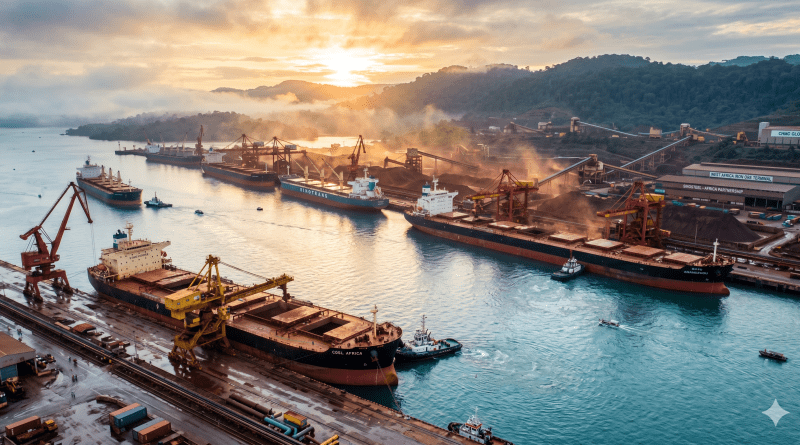
China–Africa Partnership Strengthens as Guinea’s Iron Ore Reaches Chinese Markets
A major milestone in China–Africa economic relations has been reached following the successful delivery of the first large-scale shipment of iron ore from Guinea’s Simandou project to China. The development is being widely seen as a signal of deepening economic cooperation between Africa and China, with strong implications for trade, infrastructure development, and industrial growth across the continent.
The shipment, carrying over 200,000 tons of high-grade iron ore, was transported from Guinea’s Morebaya port to China. This marks the official entry into operation of one of the most significant mining developments in Africa. The Simandou mountain range in southeastern Guinea is home to some of the world’s richest untapped iron ore reserves, estimated at over four billion tons.
The project is the result of a complex partnership involving the Government of Guinea, international mining firms, and Chinese-backed industrial consortiums. Key stakeholders include global mining company Rio Tinto alongside Chinese partners such as Chinalco and China Baowu Steel Group. Together, they have supported the development of critical infrastructure, including rail networks, ports, and logistics systems designed to transport ore efficiently from inland mining areas to international markets.
Beyond its mineral wealth, Simandou is also being recognised for its broader developmental impact. The infrastructure built around the project is expected to create thousands of jobs in Guinea, while also improving connectivity and regional trade opportunities. For many analysts, this reflects a shift in China–Africa relations from basic resource trade toward more integrated, long-term industrial partnerships.
China, as the world’s largest consumer of iron ore and steel, continues to secure strategic resource supplies to support its manufacturing and construction sectors. At the same time, African countries like Guinea are seeking investment partners capable of funding large-scale infrastructure and unlocking the value of their natural resources.
The Simandou ore, with its exceptionally high iron content, is also considered suitable for more efficient and lower-emission steel production processes. This positions the project within broader global discussions about industrial sustainability and cleaner production methods.
Economically, the project is expected to have a transformative effect on Guinea. Once fully operational, Simandou could significantly increase national export revenues, strengthen public finances, and stimulate long-term economic growth. Production forecasts suggest the mine could eventually reach export levels of more than 100 million tons annually.
Across Africa, the project is being viewed as part of a wider trend of South–South cooperation, where emerging economies collaborate to finance infrastructure, expand trade, and drive industrial development. As this partnership evolves, China’s role in Africa’s development landscape is likely to remain significant, particularly in sectors such as mining, energy, transport, and manufacturing.
The first shipment from Simandou therefore represents more than just a commercial transaction, it marks a new phase in Africa’s integration into global industrial supply chains and highlights the growing strategic importance of China–Africa economic relations.