
9 POINTS OF SONA 2026 UNPACKED: A NATION AT A TURNING POINT
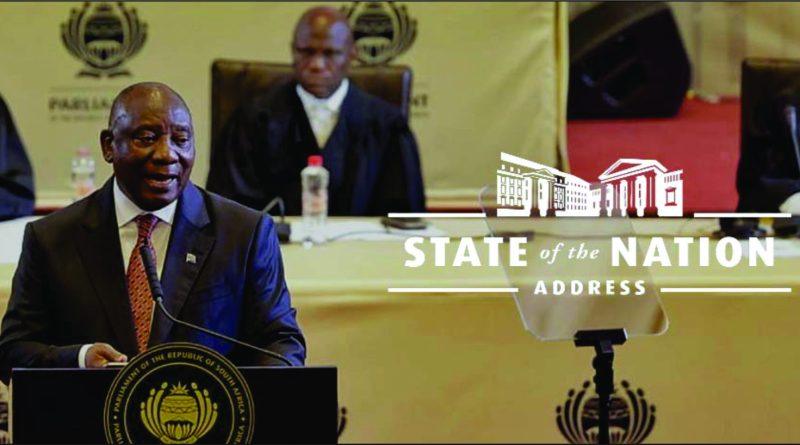
In his tenth State of the Nation Address, President Cyril Ramaphosa painted a picture of a South Africa emerging from a period of decline, buoyed by economic gains and a renewed sense of purpose. Framed by the historic milestones of the 1956 Women’s March and the 1976 Soweto Uprising, the address sought to channel the spirit of past struggles into a blueprint for the future. While celebrating progress, the President was candid about the deep-seated challenges that remain, unveiling a multi-sectoral plan to build what he termed “a stronger, more resilient, and more equal society.” Here is a sector-by-sector analysis of his key announcements.
- Economy & Finance: Green Shoots and Global Ambition
The President led with economic optimism, citing four consecutive quarters of GDP growth, two primary budget surpluses, a strengthened rand, and a booming JSE. The narrative is one of recovery and renewed investor confidence, marked by South Africa’s removal from the FATF grey list.
Key Announcements:
Infrastructure Splurge: A record R1-trillion in public investment over three years will be channeled into infrastructure, with a first-of-its-kind infrastructure bond already oversubscribed.
Investment Target: A new five-year target of R2-trillion in new investments has been set, building on the R1.5-trillion pledged at previous investment conferences.
Green Economy Pivot: This is positioned as the “biggest opportunity.” A 150% tax deduction will be introduced for investments in new energy vehicles (NEVs), with local battery production supported.
Mining 2.0: Declaring mining a “sunrise industry,” the focus is on critical minerals for the green revolution, with state funding for exploration. The IDC’s R300-million investment in a Northern Cape rare earths project was highlighted.
Trade Defence: In a volatile global environment, the government will protect local industries like steel, automotive, and ferrochrome by closing tariff loopholes.
SOE Reform: A task team will fast-track Eskom’s restructuring into a generation, transmission, and distribution entity. Transnet will pursue major PPPs for its ports and rail corridors, and a National State Enterprises Bill is being finalised for a centralised management model.
- Energy & Logistics: From Crisis Mode to Transformation
The address boldly declared that “load shedding is behind us.” The focus has now shifted from crisis management to fundamentally restructuring the energy and logistics sectors for long-term efficiency and lower costs.
Key Announcements:
Energy Mix: By 2030, over 40% of energy supply is targeted to come from renewable sources. An independent state-owned transmission entity will be established to oversee a competitive electricity market.
Grid Expansion: The first round of independent transmission projects will commence this year to unlock private investment in expanding the national grid.
Rail Revival: Private rail operators can now access the network. Major PPPs for port terminals and rail corridors (like Durban’s Pier 2) are imminent, aiming to restore world-class standards.
High-Speed Rail: The dream of high-speed rail is inching closer, with a request for proposals to be issued for routes like Johannesburg to Musina, Durban etc.
- Crime & Justice: A New War on Organised Crime
Ramaphosa identified organised crime as “the most immediate threat to our democracy.” The response is a multi-pronged strategy combining military force, technological intelligence, and systemic reform.
Key Announcements:
Military Deployment: The SANDF will be deployed to support the police in hotspots in the Western Cape (gang violence) and Gauteng (illegal mining).
New Task Force: A “hard-hitting” criminal justice reform initiative, modelled on Operation Vulindlela, will be established in the Presidency to crack down on organised crime, corruption, and the illicit firearms trade.
Police Accountability: Following the Madlanga Commission, senior police and metro police managers will undergo re-vetting and lifestyle audits.
Gun Control: Legislation on firearm licensing and trading will be streamlined and enforcement increased.
Illicit Economy: A national programme will use data analytics and AI to disrupt the trade in counterfeit goods in high-risk sectors like tobacco and fuel.
Whistleblower Protection: The Whistleblower Protection Bill will be introduced, criminalising retaliation and providing support to those who speak out.
- Local Government & Basic Services: The Water Crisis and Systemic Overhaul
The President acknowledged that failing municipalities are the root cause of service delivery protests, particularly over water. A major intervention is planned.
Key Announcements:
National Water Crisis Committee: Chaired by the President himself, this committee will coordinate a national response, deploying technical experts to struggling municipalities.
Accountability: Criminal charges will be laid against municipal managers “in their personal capacity” for violating the National Water Act. The Water Services Amendment Bill will allow for the revocation of licenses from failing providers.
Financial Incentives: A R54-billion incentive fund will reward metros that ring-fence water and electricity revenues for infrastructure maintenance and upgrades.
White Paper on Local Government: A fundamental overhaul is planned to create a more differentiated system where municipalities’ functions match their capacity. Senior appointments will be made independently to prevent political interference.
- Agriculture & Rural Development: A Tale of Two Industries
The sector is presented as a success story and a crisis at the same time. While exports boom, the cattle industry faces an unprecedented animal health emergency.
Key Announcements:
Foot-and-Mouth Crisis: Classified as a national disaster. The state will centrally facilitate the acquisition of 28 million vaccines to inoculate the national herd of 14 million cattle over the next year. A presidential task team will monitor progress monthly.
Support for Farmers: 10,000 new extension officers will be deployed to support and improve productivity. The Blended Finance Scheme has already provided R7.8-billion to black producers.
Export Growth: New markets are being opened for a range of goods, from citrus and avocados to maize and wine.
- Social Welfare & Health: A Mission to Protect the Vulnerable
The address linked social support directly to economic participation, with a focus on the “first 1,000 days” of a child’s life and the continuation of the popular SRD grant.
Key Announcements:
SRD Grant: The grant will be continued but redesigned to act as a bridge to livelihoods, skills development, and work opportunities.
War on Stunting: A national mission launched to end child stunting by 2030, with targeted nutritional interventions for pregnant women and infants. Funding will be detailed in the MTBPS.
NHI & Health Infrastructure: Substantial investment in academic hospitals like George Mukhari is planned, using public and private financing. A massive rollout of the Lenacapavir HIV prevention injection is planned.
Alcohol Abuse: Provinces are urged to tighten alcohol regulations (trading hours, outlet density), while national government consults on minimum unit pricing and advertising restrictions.
- Education & Skills: From Matric to the Workplace
Celebrating an 88% matric pass rate (a record high), the focus is now on retaining learners and ensuring they leave the system with skills relevant to the economy.
Key Announcements:
Skills Revolution: A “fundamental overhaul” of the skills system will introduce a dual training model (theory + practical work). The number of SETAs will be reduced to improve quality, and more of the skills levy will be returned to employers (restored to 40%).
Higher Education Expansion: A proposal is being developed to build more universities and TVET colleges. A specific directive was given to address the critical shortage of student accommodation.
ECD: Grade R is being made compulsory, and a mass registration drive for ECD facilities is underway.
- Digital Transformation & Home Affairs: The MyMzansi Era
Government services are set for a major digital overhaul to improve efficiency and accessibility.
Key Announcements:
Digital ID: Home Affairs will launch the Digital ID this year, enabling secure access to digital services.
MyMzansi Platform: Citizens will soon be able to access services like online police statements, SASA grant eligibility tests, and digitised documents (driver’s licences, matric certificates) on this single platform.
Visa Reforms: The Electronic Travel Authorisation system will be extended to all visa-required countries, promising 24-hour digital processing for tourists.
- Foreign Policy: Sovereign and Unbowed
In a world of great-power politics, Ramaphosa struck a defiant tone, asserting South Africa’s sovereignty and commitment to multilateralism.
Key Announcements:
“We will not be bullied”: A clear statement that South Africa will promote its national interests and values without submitting to coercion from more powerful states.
Global South Champion: Building on its G20 presidency, South Africa will continue to push for reforms in global governance institutions and the local beneficiation of critical minerals.
DRC Troop Withdrawal: A request has been made to the UN to withdraw South African troops from the mission in the DRC to consolidate the defence force.
Palestine & Western Sahara: Reiterated solidarity with the people of Palestine and other oppressed peoples globally.
Conclusion: A Defining Year
President Ramaphosa framed 2026 as a “year of transformative change,” a bridge between the struggles of the past and a prosperous future. The speech was a mix of report-back, pep talk, and battle plan. The success of this ambitious agenda, however, will be measured not in the grandeur of its announcements, but in the reliable flow of water from taps, the number of young people in jobs, and the tangible safety of citizens in their communities. The window of opportunity is open; the hard work of walking through it now begins.