
China’s Renewable Energy Investments Transform Africa’s Power Landscape
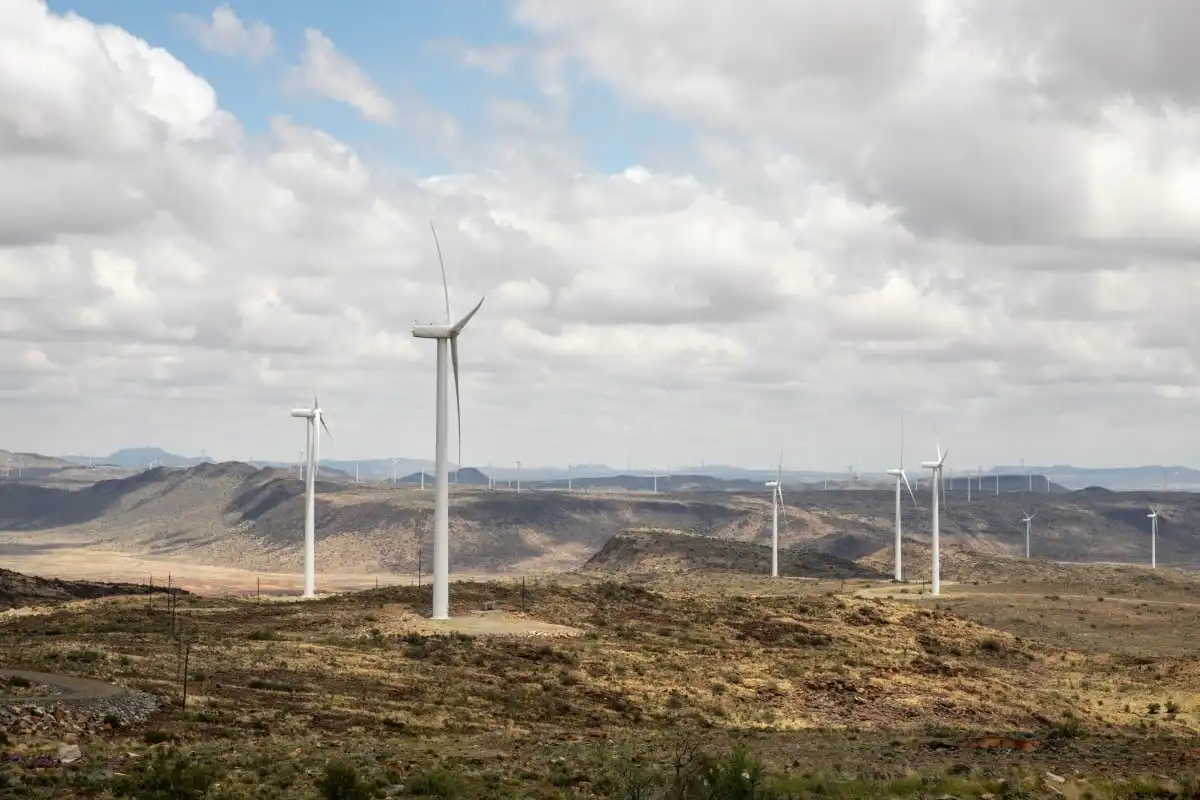
China is significantly increasing its renewable energy investments across Africa, with a notable focus on solar and wind projects. According to a recent report by UK-based think tank ODI Global, 59% of China’s energy projects in Africa in 2024 were in the renewable sector. This shift aligns with China’s global commitment to halt the funding of new coal-fired power plants overseas, a policy introduced in 2021.
Between 2010 and 2024, China invested approximately $66 billion in Africa’s energy sector, with a significant portion directed toward renewable energy development. Chinese exports of solar and wind technology to Africa surged by 153% from 2020 to 2024, driven by Africa’s growing energy demand and China’s dominance in global solar panel production.
South Africa has emerged as a key partner in this green energy collaboration. Chinese firms have been instrumental in advancing South Africa’s renewable energy infrastructure, particularly in solar power projects. This partnership supports South Africa’s goals of diversifying its energy mix and reducing reliance on fossil fuels.
Other African nations are also benefiting from Chinese renewable energy investments. In Kenya, projects like the Garissa Solar Park and the Olkaria IV geothermal plant have received Chinese support. Mozambique has seen Chinese investment in liquefied natural gas (LNG) projects, while Namibia’s NamPower Solar Power Station is being developed with Chinese collaboration.
China’s approach in Africa often involves engineering, procurement, and construction (EPC) contracts, allowing for the development of energy projects without long-term ownership commitments. This model has facilitated the rapid deployment of renewable energy infrastructure across the continent.
As global demand for clean energy continues to rise, China’s investments in Africa’s renewable energy sector are poised to play a crucial role in meeting the continent’s energy needs while supporting global climate goals.