
How China’s Investment Is Powering Africa’s Digital Future
China’s expanding engagement in Africa is transforming the continent’s digital landscape in ways that touch everyday life, from connecting rural classrooms to enabling farmers to sell goods online. This growing partnership is about bridging digital divides, creating opportunities, and supporting local innovation.
Connecting People and Places
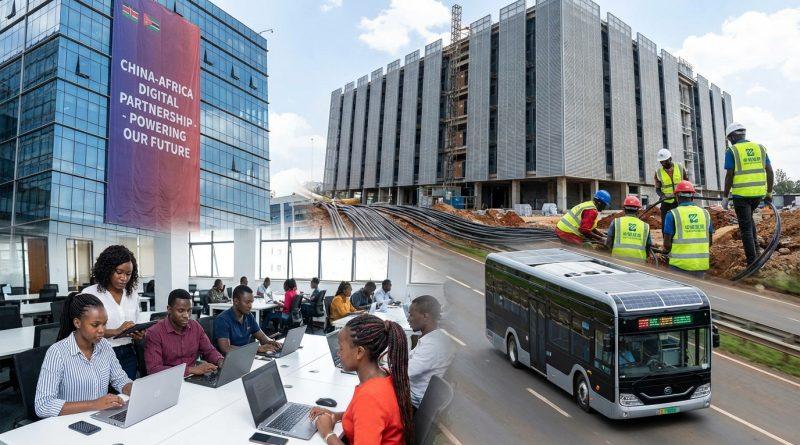
Across Africa, Chinese companies have helped build much of the digital infrastructure that makes modern internet access possible. Over the last decade, they have laid hundreds of thousands of kilometres of fiber-optic cables, erected thousands of mobile towers, and built data centres in countries like Nigeria, Kenya, South Africa and Egypt, powering services from mobile banking to e-government systems.
In practical terms, this means a young student in Nairobi can attend online classes, a small entrepreneur in Lagos can sell products on the internet, and telehealth services can reach patients in distant towns, all thanks to stronger digital networks.
Mobile Money and Daily Convenience
Africa leads the world in the number of mobile money accounts, with more than half of all such accounts globally on the continent. Chinese partnerships with African mobile operators have helped make digital payments simpler, cheaper and more secure. Platforms like M-Pesa in Kenya and Tanzania let people pay bills, send money or access small loans from simple phones, especially powerful in places without traditional bank branches.
For many families, this means more than convenience: it’s financial inclusion, the ability to save, pay for school fees, manage emergencies, and grow a small business without needing a formal bank account.
Smart Cities and Everyday Efficiency
Cities like Addis Ababa, Kigali and Lusaka are embracing smart technology to improve daily life. Chinese tech partners are helping install smart traffic systems to reduce congestion, digital water and electricity billing to improve service delivery, and waste management systems that respond efficiently to community needs. These systems make cities run smoother, safer and cleaner for residents.
Training Youth for Tomorrow’s Jobs
Beyond infrastructure, China-Africa cooperation is equipping the next generation with digital skills. Initiatives like the Africa Digital Empowerment and Innovation Hub are training thousands of young people in areas such as cloud computing, artificial intelligence and cybersecurity. These programs help young Africans compete for digital jobs and build their own startups.
Boosting Local Business and Innovation
Chinese credit and investment are also helping build digital industrial parks that support local small and medium-sized enterprises, from electronics assembly to IT services. In Botswana, for example, a modern data centre constructed with Chinese support now anchors the country’s digital infrastructure and provides secure, high-capacity storage and processing for businesses and government services.
Real Impact in Everyday Lives
These digital advances have real effects on ordinary people:
- A teacher in rural Zambia can now livestream lessons thanks to improved internet access.
- A farmer in Mozambique uses mobile platforms to check crop prices and sell produce beyond the local market.
- A teenager in South Africa learns coding and digital design skills at a community tech hub.
Such stories show that digital transformation isn’t abstract; it’s changing how people learn, earn and connect.
A Shared Digital Future
While challenges like affordability and digital literacy remain, China-Africa digital cooperation has already helped bring connectivity, financial services and digital tools to millions. By pairing infrastructure with training and local enterprise support, this partnership is fostering inclusive digital growth that touches daily life for ordinary Africans.