
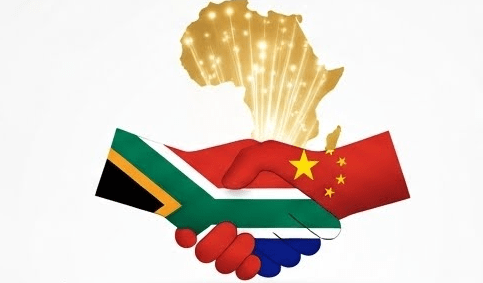
China and South Africa Unveil New Africa Modernisation Initiative at G20 2025
South Africa and China have jointly launched a bold Africa Modernisation Initiative during the 2025 G20 Summit in Johannesburg, a breakthrough collaboration aimed at supporting economic transformation, digital development, and sustainable industrial growth across the African continent.
Announced on the sidelines of the Leaders’ Summit, the initiative places South Africa and China at the centre of a new development blueprint designed to help African nations transition toward modern industries, cleaner energy, and technology-driven economic models. Officials described it as a “practical pathway to African industrialisation” and a “partnership built on shared priorities.”
A Vision for Africa’s Next Growth Chapter
South African President Cyril Ramaphosa and Chinese Premier Li Qiang, who held bilateral discussions ahead of the G20 sessions, agreed that Africa needs modern infrastructure, skills, and new generation industries to fully participate in the global economy. The new programme is expected to support these priorities through:
- Digital economy cooperation (AI, cloud services, e-commerce)
- Climate-resilient infrastructure and renewable energy projects
- Support for African manufacturing zones
- Technology and skills exchanges for African youth
- Financing platforms for industrial projects
South Africa’s hosting of the G20 has provided Pretoria with an opportunity to push African issues to the top of the global agenda, from fairer trade rules to inclusive finance. With China’s backing, African leaders noted that the initiative may serve as a bridge between African development plans and global capital.
Expanding Existing Cooperation
The modernisation programme builds on existing China–Africa platforms, including the Forum on China–Africa Cooperation (FOCAC) and the Belt and Road cooperation projects already underway across the continent. It also aligns with South Africa’s own industrial policy goals, which emphasise localisation, job creation and export expansion.
In 2024 and 2025, China supported several key South African sectors, from renewable energy manufacturing to vocational training for engineering graduates. This new initiative expands that cooperation to the continental level, giving African economies greater access to technology, training partnerships, and development financing.
Why This Matters
The initiative could be transformative for Africa’s long-term development. As global competition intensifies and economic inequalities widen, African countries need partners willing to support industrialisation rather than just extractive trade. China’s commitment, paired with South Africa’s diplomatic leadership, provides momentum for a more self-reliant, skills-driven, and modern Africa.
For South Africa, it positions the country as a regional convenor capable of shaping development priorities. For China, it strengthens its role as a long-term strategic partner committed to Africa’s future.
As the G20 Summit concludes, both nations say the new initiative represents “the next chapter” of a partnership built on shared development goals, mutual benefit, and a vision for a modern, globally competitive African continent.