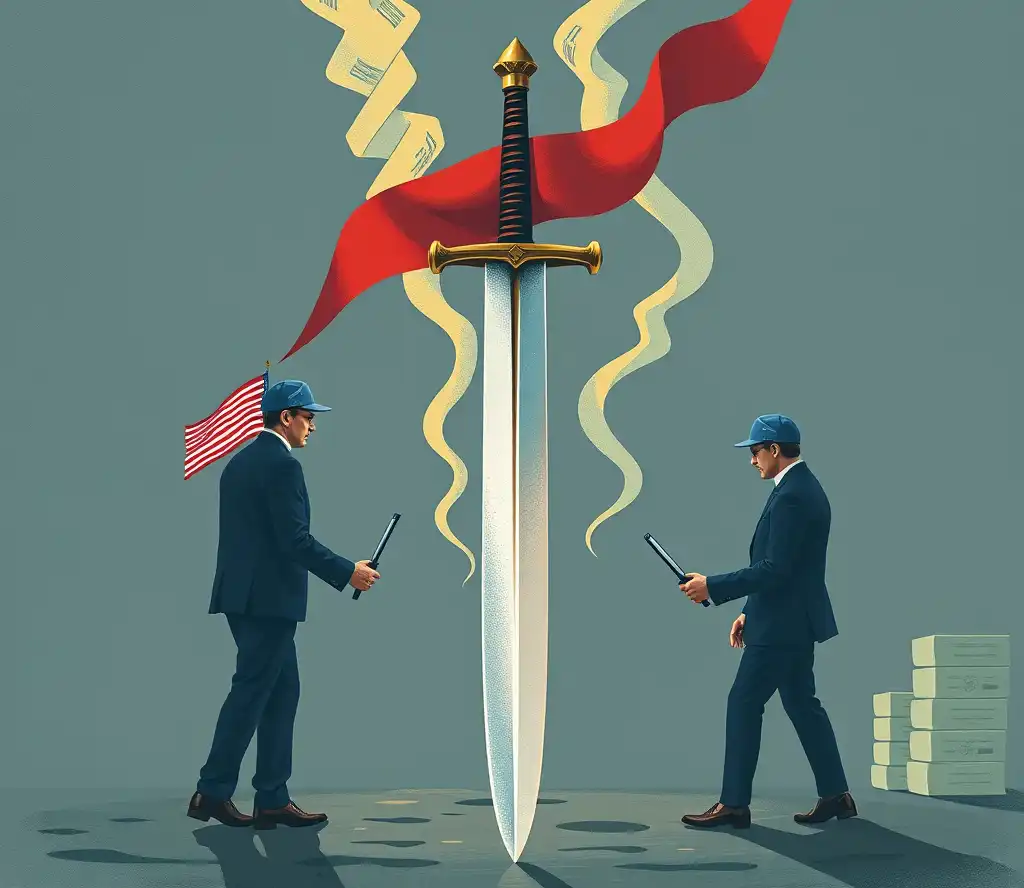
Commentary: Tariffs a Double-edged Sword
Dr G.H. Chitanga
Since taking office in January, Trump has hiked the tariffs paid by U.S. importers for goods from China to 145%, in addition to those he imposed on many Chinese goods during his first term and the duties levied by the Biden administration.
The Trump administration imposed 145% levies on Chinese imports, and between 30 to 50% tariffs on other countries, later reduced to a minimum of 10%. U.S. Treasury Secretary Scott Bessent and chief trade negotiator Jamieson Greer will met Chinese economic tsar He Lifeng in Switzerland to discuss containing the damaging trade war between the world’s two biggest economies, which has already entangled global supply chains.
Trump’s push on tariffs is widely seen to be elevating risks to the U.S. economy, with concerns that they will lift prices for American consumers and businesses while at the same time cutting into the demand that has propped up the job market. The tariffs risk to plunge the global economy into recession, and trigger escalating inflation.
The chaotic rollout of Trump’s aggressive trade policies left investors rattled by months of financial market volatility as U.S. stocks tumbled to a record low since mid-February, making marginal gains in recent days, while the dollar remains weaker against a basket of major trading partners’ currencies.
What level tariff rates settle at – and not just for China and the US, but other major trading partners will be the major focus of investors going forward. The US may have chosen self-isolation through its America first posture, but China remains the main global driver of open commerce, particularly with the global south. There is no doubt that tariffs have debilitating effects on much of the weaker economies in the global south.
Against the costs of US economic tariffs, the global south will be wiser to seek and consolidate economic. Thus, US tariffs could give impetus for shifting economic ties and forging trusted and respectful relations that are predictable and mutually beneficial.
These moments of heightened global uncertainty and insecurity should motivate leaders in the global south to be more united working together in such multilateral platforms as the BRICS, the Forum for Africa China Cooperation (FOCAC), the Belt and Road Initiative (BRI) and the United Nations to firmly defend multilateralism and free trade, as much as the interests of the global south and their people.
More importantly, countries in the global south must consolidate intra-grouping multilateral relations, enhance consumption within their regions, while leveraging their own resources and markets for mutually beneficial trade.